
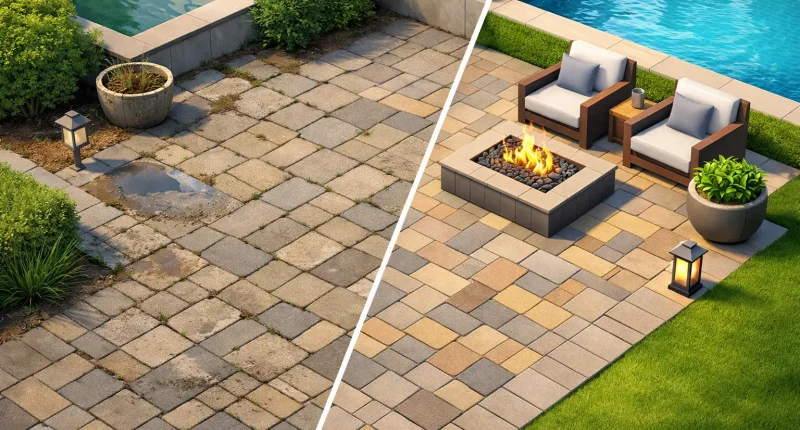
A dramatic before-and-after paver restoration is not about making an older surface look artificially new. It is about removing buildup, correcting neglected joints, addressing stains or failed sealer where appropriate, and applying the right protection so the finished surface looks cleaner, more consistent, and easier to maintain.
For Tampa Bay homeowners and commercial property owners, that improvement can be especially noticeable on driveways, patios, walkways, and pool decks exposed to sun, rain, humidity, irrigation, landscaping debris, and everyday traffic.
At HydroGlow Cleaning and Floor Care, paver restoration begins with evaluating the actual condition of the surface, the joints, existing stains, and any previous sealer before recommending the right combination of cleaning, joint sanding, correction, and sealing.
What Changes During Paver Restoration
The most visible change is often the overall color and definition of the surface.
Dirt, organic buildup, residue, worn sealer, and staining can make pavers look darker, duller, or more uniform than they originally were.
Professional cleaning may reveal more of the original color variation and pattern that had been hidden under buildup.
Another noticeable change is the appearance of the joints.
When joint sand has washed out or become uneven, the surface can look neglected even if the paver faces are relatively clean.
After cleaning and appropriate joint restoration, the paver pattern usually looks more defined and complete.
The third change is maintainability.
A properly prepared and sealed paver surface may be easier to clean and less prone to absorbing certain contaminants than an untreated or weathered surface.
Why Tampa Bay Pavers Lose Their Appearance
Pavers are durable, but Florida conditions can change their appearance over time.
Common contributors include:
- Sun and UV exposure
- Heavy rain
- Humidity
- Organic buildup
- Irrigation residue
- Tire marks
- Oil or automotive stains
- Leaf tannins
- Poolside residue
- Worn or failing sealer
- Joint sand loss
- Uneven weathering
Shaded areas may stay damp longer and develop darker organic buildup, while fully exposed sections can weather differently because of sun and rain.
This is one reason a driveway or patio may look blotchy even when it is cleaned regularly.
Joint Sand Loss Affects the Finished Appearance
Joint sand is part of the overall paver system.
Over time, it can be displaced by:
- Rain
- Drainage
- Foot traffic
- Vehicle traffic
- Previous pressure washing
- Ant activity
- Routine maintenance
Low or missing joint sand can leave joints less complete and may contribute to a less stable-looking surface.
Cleaning alone does not address that condition.
When appropriate, joint sanding or re-sanding may be included as part of the restoration process.
Professional Paver Restoration Is a Sequence
A strong restoration result comes from following the right order.
The process generally starts with inspection.
A professional evaluation may look at:
- Organic buildup
- Embedded soil
- Stains
- Previous sealer
- Joint condition
- Drainage patterns
- Surface wear
- Uneven coloration
- Visibly worn, uneven, or shifted areas
The exact process depends on what is actually affecting the surface.
Professional Paver Cleaning Comes First
Professional paver cleaning is intended to remove the buildup that is masking the true condition of the pavers.
The cleaning process may address:
- Dirt
- Organic growth
- Surface residue
- Certain stains
- Accumulated grime
Appropriate cleaning solutions, equipment, pressure, and technique all matter.
Too much pressure can:
- Leave visible cleaning lines
- Damage softer or weathered pavers
- Remove excessive joint sand
- Create uneven-looking areas
- Affect surrounding surfaces
Different stains may also require different treatment.
Rust, oil, irrigation discoloration, leaf tannins, and efflorescence do not all respond to the same method.
Restoring the Joints
After cleaning, the joints should be evaluated.
If joint sand is low or missing, sanding or re-sanding may be appropriate before sealing.
Benefits can include:
- Cleaner-looking joints
- Better visual definition
- More consistent support
- Reduced open space for debris
Joint sanding does not permanently eliminate weeds, ant activity, or all paver movement.
Its role is to restore the joints as part of the overall paver maintenance and restoration process.
Sealing Can Change the Finished Appearance
Sealing often creates one of the most noticeable visual differences in a before-and-after project.
Depending on the paver type, condition, and product selected, a sealer may help:
- Enhance color
- Create a more consistent appearance
- Reduce absorption of certain contaminants
- Make routine cleaning more manageable
Some property owners prefer a natural appearance, while others prefer a richer color-enhanced finish.
The best choice depends on:
- Paver type
- Existing condition
- Previous treatments
- Sun exposure
- Vehicle or foot traffic
- Poolside use
- Desired appearance
The goal should be a finish that suits the surface rather than simply choosing the highest possible gloss.
What Before-and-After Photos Do Not Always Show
Before-and-after photos can be helpful, but they do not tell the entire story.
A photograph may show:
- Improved color
- Cleaner joints
- Reduced buildup
- A more even finish
What it may not show is whether:
- Joint sand was properly restored
- Stains were treated appropriately
- Failed sealer was corrected
- The surface was properly dried before sealing
- The sealer was matched to the paver system
Those details matter to the quality of the finished work.
Not Every Stain or Defect Will Disappear Completely
Professional restoration can often produce a major improvement, but not every surface can be returned to an exact original condition.
Results may be affected by:
- Deep oil staining
- Permanent pigment loss
- Surface wear
- Previous chemical damage
- Failed coatings
- Damaged pavers
- Long-term staining
A trustworthy paver professional should explain what can reasonably be improved before work begins.
The goal is to restore the best practical appearance of the existing surface, not to hide permanent damage with unrealistic promises.
When Paver Restoration Makes Sense
Professional paver restoration may be appropriate when the pavers are still structurally serviceable but have become visually neglected.
Common signs include:
- Widespread organic buildup
- Faded or dull appearance
- Uneven color
- Persistent staining
- Low or missing joint sand
- Failed or aging sealer
- Hazy or cloudy areas
- Pavers that are increasingly difficult to maintain
Restoration may also be worthwhile before:
- Selling a property
- Hosting an event
- Updating landscaping
- Improving exterior curb appeal
- Refreshing commercial entry areas or common spaces
Paver Restoration for Commercial Properties
Paver restoration can also support commercial and managed properties.
Common areas include:
- Building entrances
- Walkways
- Courtyards
- Pool and recreation areas
- HOA common areas
- Outdoor dining spaces
- Retail properties
- Office properties
Keeping these areas clean and well maintained can support a more professional overall appearance.
Maintaining Restored Pavers
After professional restoration, simple maintenance can help preserve the result.
Helpful practices include:
- Sweep leaves and debris regularly
- Address spills promptly
- Keep irrigation from repeatedly spraying the hardscape when possible
- Avoid harsh chemicals
- Avoid overly aggressive pressure washing
- Monitor joint sand
- Watch for developing stains
- Check the condition of the sealer over time
Different stains should be treated according to their cause rather than using the strongest cleaner available.
Professional Paver Restoration in Tampa Bay
Pavers can look worn long before replacement is necessary.
In many cases, professional cleaning, joint restoration, stain treatment, and sealing can significantly improve the appearance of driveways, patios, walkways, and pool decks.
HydroGlow Cleaning and Floor Care provides professional paver cleaning, restoration, joint sanding, and sealing throughout Tampa Bay and surrounding service areas.
If your pavers look faded, dirty, stained, uneven, or overdue for professional care, call HydroGlow Cleaning and Floor Care at 813-586-0801 to request an evaluation or estimate.