
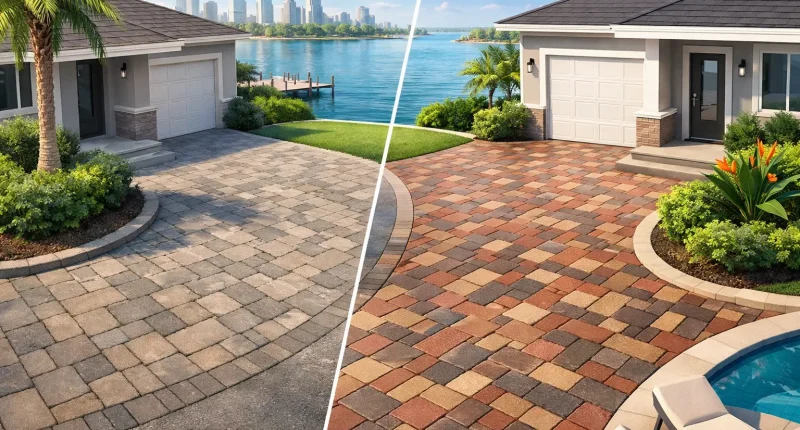
A paver patio, driveway, walkway, or pool deck can look old long before the pavers themselves are actually worn out. In Tampa Bay, strong sun, heavy rain, humidity, irrigation, pool traffic, organic buildup, and everyday use can gradually leave once-vibrant pavers looking faded, blotchy, dull, or difficult to maintain.
Professional faded paver restoration starts by identifying why the surface has changed. Sometimes the original color is simply hidden beneath dirt and organic buildup. In other cases, an aging or failing sealer has become dull, hazy, or uneven. Some pavers may also experience genuine weathering and loss of color intensity over time.
At HydroGlow Cleaning and Floor Care, the first step is evaluating the paver surface, the joints, any previous sealer, and the type of staining or discoloration present. That helps determine whether the area primarily needs cleaning or whether joint sanding, sealer correction, resealing, or a more complete restoration process should also be considered.
Why Pavers Can Look Faded in Tampa Bay
Outdoor pavers are designed to handle weather, but Florida conditions can still change their appearance over time.
Common causes include:
- Sun and UV exposure
- Embedded dirt and soil
- Organic buildup
- Irrigation residue
- Mineral deposits
- Poolside traffic
- Sunscreen and outdoor-use residue
- Worn or failing sealer
- Uneven weathering
- Vehicle traffic
- Leaf tannins and landscaping debris
A paver surface that looks faded is not always permanently discolored. Dirt, worn coatings, surface residue, or uneven sealer can make the color appear much duller than it actually is.
This is why proper cleaning and evaluation should come before deciding how to restore the finish.
A Faded Paver Surface May Need More Than Cleaning
Some pavers respond very well to professional cleaning alone.
Others may still look uneven after cleaning because the problem involves an older sealer, joint deterioration, staining, or weathered surface conditions.
A professional inspection may look for:
- Failing or uneven previous sealer
- Hazy or cloudy areas
- Embedded organic buildup
- Efflorescence or mineral residue
- Rust staining
- Oil or automotive stains
- Irrigation-related discoloration
- Low or missing joint sand
- Damaged or shifted pavers
- Uneven color across the surface
The goal is to determine what is actually affecting the appearance before applying a new finish.
Professional Paver Cleaning Comes First
A successful restoration begins with proper surface preparation.
Professional paver cleaning can help remove:
- Embedded dirt
- Organic buildup
- Surface residue
- Certain stains
- Contaminants that could interfere with sealing
Pressure alone is not a complete restoration process.
Improper pressure washing can:
- Leave cleaning lines
- Damage the paver face
- Remove excessive joint sand
- Create uneven results
- Affect softer or weathered surfaces
The appropriate equipment, cleaning solution, pressure, and technique depend on the type and condition of the pavers.
Persistent stains may also require targeted treatment rather than one general cleaner.
Oil, rust, leaf stains, irrigation residue, and other discoloration do not all respond to the same process.
Joint Sand Restoration
After cleaning, the joints should be evaluated.
Over time, joint sand may be displaced by:
- Rain
- Drainage
- Pressure washing
- Vehicle traffic
- Foot traffic
- Ant activity
- Previous maintenance
Low or missing joint sand can make an otherwise clean paver surface look unfinished and may reduce the consistency of the joints.
When appropriate, joint sanding or resanding can be completed before sealing.
Benefits may include:
- A cleaner, more finished appearance
- More consistent joints
- Better visual definition between the pavers
- Reduced open space where debris can collect
Joint sanding does not permanently eliminate weeds, prevent all movement, or correct underlying installation problems. Its role is to restore depleted joints as part of the overall paver maintenance and restoration process.
When Old Paver Sealer Becomes Part of the Problem
A clean surface can still look blotchy or uneven if the previous sealer has deteriorated.
Common signs may include:
- Cloudy or hazy areas
- Uneven color
- Peeling or flaking
- Dark patches
- Areas that look dull while others remain enhanced
- A finish that no longer responds evenly to cleaning
In these situations, simply applying another coat of sealer may not correct the problem.
The existing surface should first be evaluated to determine whether the old coating can be cleaned and prepared for resealing or whether additional correction or removal is needed.
This step is important because sealing over an unsuitable surface can preserve haze, stains, moisture issues, or inconsistencies beneath the new finish.
Paver Sealing for Natural or Color-Enhanced Appearance
Once the pavers are properly cleaned, prepared, and the joints addressed as needed, professional paver sealing may help improve the appearance and make ongoing maintenance more manageable.
Different finish preferences are possible depending on the paver type, product, and condition.
Some property owners prefer:
- A more natural appearance
- A low-sheen finish
- A richer color-enhanced appearance
The best option is not automatically the glossiest one.
The appropriate finish should match:
- The paver material
- The condition of the surface
- Previous treatments
- Sun exposure
- Vehicle or foot traffic
- Poolside use
- The property owner’s appearance preference
For pool decks and other frequently wet areas, product selection should also take the intended use of the surface into account.
Can Faded Pavers Be Restored to Their Original Color?
Sometimes professional cleaning and sealing can make a dramatic difference in how pavers look.
However, not every paver can be returned to its exact original appearance.
Results depend on factors such as:
- Age
- Paver type
- Sun exposure
- Previous coatings
- Staining
- Surface wear
- Installation condition
- How long the surface has been neglected
Cleaning may reveal color that was hidden beneath grime and residue.
A color-enhancing sealer may deepen the appearance of some pavers.
However, permanent weathering or pigment loss may still remain visible.
A professional evaluation helps establish realistic expectations before work begins.
When Existing Paver Sealer Needs Correction
Some restoration projects are more involved because the existing sealer has deteriorated or failed.
Possible signs include:
- Peeling
- Whitening
- Cloudiness
- Uneven darkening
- Excessive gloss
- Trapped residue
- Patchy areas that do not clean evenly
In these situations, the existing finish should be evaluated before another sealer is applied.
Depending on the condition of the surface, additional preparation or sealer correction may be needed before resealing. Proper preparation is usually more important than simply adding another coating over an existing problem.
The objective is to create the best possible foundation for the new finish based on the condition of the pavers and previous treatments.
Maintaining Restored Pavers
After paver restoration and sealing, simple maintenance can help preserve the appearance of the surface.
Helpful practices include:
- Sweep leaves and debris regularly
- Address spills promptly
- Keep irrigation from repeatedly spraying the hardscape when possible
- Remove organic debris before it breaks down on the surface
- Avoid harsh chemicals
- Avoid overly aggressive pressure washing
- Watch for developing stains
- Monitor joint sand and sealer condition
Different stains should be treated according to their cause rather than using the strongest cleaner available.
Rust, oil, organic staining, irrigation residue, and mineral deposits may each require a different approach.
When Professional Faded Paver Restoration Makes Sense
Professional service may be appropriate when pavers have:
- Widespread fading or dullness
- Uneven appearance
- Significant organic buildup
- Persistent staining
- Low or missing joint sand
- Failed previous sealer
- Cloudy or hazy coatings
- Large areas that no longer clean evenly
- Multiple issues occurring at the same time
A professional evaluation can help determine whether the surface needs cleaning, stain treatment, joint sanding, sealing, sealer correction, or a more complete restoration process.
HydroGlow Cleaning and Floor Care provides professional paver cleaning, restoration, joint sanding, and sealing for driveways, patios, pool decks, walkways, and other outdoor hardscapes throughout Tampa Bay and surrounding service areas.
Professional Faded Paver Restoration in Tampa Bay
Faded-looking pavers do not automatically mean replacement is necessary.
In many cases, proper cleaning, joint restoration, and a carefully selected sealing process can significantly improve the appearance of an existing paver surface.
HydroGlow Cleaning and Floor Care approaches each project based on the actual condition of the pavers rather than applying the same process to every property.
If your driveway, patio, pool deck, or walkway looks faded, blotchy, stained, or overdue for professional care, call HydroGlow Cleaning and Floor Care at 813-586-0801 to request an evaluation or estimate.