
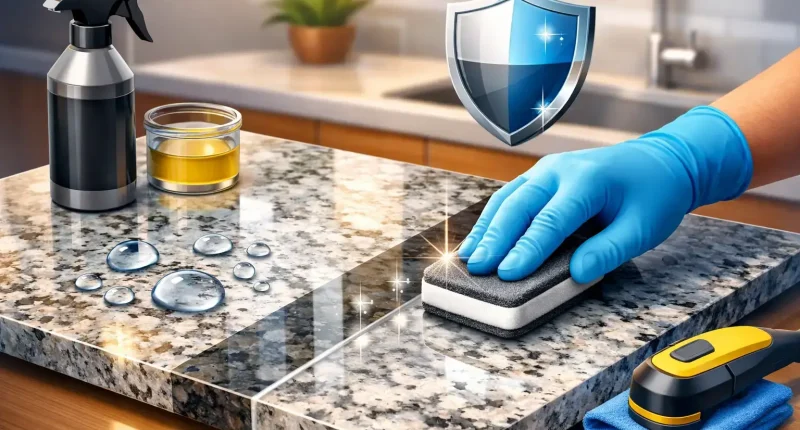
A granite countertop can look perfectly clean and still be due for professional care. Cooking oils, coffee, wine, citrus, and everyday hand contact can gradually affect how the stone performs, especially around sinks, cooktops, bar areas, and busy commercial counters. A professional granite countertop sealing service helps protect the stone from absorbing common spills, makes routine cleanup easier, and preserves the polished appearance that made granite a worthwhile investment in the first place.
Granite is known for its durability, but it is not maintenance-free. Every slab has its own mineral makeup, finish, porosity, and history of use. Some countertops hold up well for years between treatments. Others, particularly lighter or more porous stone, may need attention sooner. The right approach starts with evaluating the actual condition of the surface rather than applying a one-size-fits-all schedule.
What Granite Sealing Actually Does
Granite is a natural stone with small pores that can take in liquids if left unprotected. A quality penetrating sealer fills those pores below the surface, slowing absorption without changing the stone’s natural color or polished finish. That added reaction time matters when a glass of red wine tips over or cooking oil splashes beside the range.
Sealing does not make a countertop invincible. It will not repair chips, remove deep scratches, correct cracked stone, or erase damage that has already occurred. It also does not replace sensible daily care. Spills should still be wiped up promptly, and abrasive pads or harsh cleaners should stay out of the kitchen routine.
What it does provide is practical protection. Properly sealed granite is easier to maintain, less likely to develop stubborn discoloration from everyday spills, and better positioned to keep its clean, finished look through years of use.
Signs You May Need Granite Countertop Sealing Service
The most reliable sign is not simply the age of the countertop. It is how the stone reacts to moisture and how it looks after normal cleaning. If water darkens an area of granite and remains visible after a few minutes, the surface may be taking in moisture more readily than it should.
You may also notice that spills seem to leave darker marks, the countertop looks uneven in certain lighting, or cleaning no longer restores the fresh appearance you expect. Areas around the sink often show the first signs because they receive frequent water exposure, soap residue, food preparation traffic, and repeated wiping.
A countertop that appears dull is not always a sealing issue. Residue from household sprays, dish soap, or improper stone cleaners can leave a film that mutes the shine. In other cases, the stone may need a more detailed cleaning or polishing step before protection is applied. This is why a professional inspection is valuable. The service should address the cause of the problem, not just cover it up.
Why Store-Bought Products Can Create More Work
Many homeowners try a spray sealer after seeing water bead on the counter or noticing a small spot. That can be a reasonable short-term option for a lightly used surface, but it comes with limitations. Not every product is formulated for every type of granite finish, and applying too much product can leave behind streaks, haze, or a tacky feel.
Preparation also determines the result. If oils, food residue, cleaner buildup, or embedded soil remain on the surface, sealing over them can lock in the problem. A countertop needs to be thoroughly cleaned and allowed to dry properly before treatment. The sealer must then be applied evenly, given the right dwell time, and buffed correctly so residue does not remain on the polished surface.
Professional service is especially useful when the stone has visible staining, dull sections, inconsistent protection, or years of product buildup. A trained stone-care specialist can identify whether the countertop needs cleaning, spot treatment, polishing, sealing, or a combination of services.
The Professional Granite Countertop Sealing Process
A careful granite countertop sealing service begins with an assessment of the stone, its finish, and its current condition. The goal is to understand how the countertop is performing before selecting a treatment. Dark granite, light granite, honed surfaces, and highly polished surfaces can respond differently.
The countertop is then cleaned using stone-appropriate methods that remove residue without harming the finish. Problem areas near the sink, cooktop, seams, and backsplash receive close attention because these are often where spills and buildup collect.
Once the stone is clean and dry, the appropriate sealer is applied with controlled coverage. Excess material is removed and the surface is buffed to leave the countertop looking natural rather than coated or cloudy. A final review checks for uniform appearance and confirms that the surface has been treated with care.
For Tampa Bay homes, this detail matters. Humidity, active family kitchens, entertaining, rental turnover, and frequent cleaning can all influence how a countertop wears over time. A professional service is designed around the countertop in front of you, not a generic maintenance promise.
How Often Should Granite Be Sealed?
There is no universal answer. Many granite countertops benefit from professional evaluation every one to three years, but the right interval depends on the stone and how the space is used. A lightly used bathroom vanity may hold protection longer than a kitchen island used every day for meal preparation, homework, gatherings, and serving food.
The type of sealer used previously also matters. Some treatments offer longer-lasting protection than others, while frequent use of harsh or acidic cleaners may reduce their effectiveness. Granite that has been improperly maintained may need care sooner, even if it was sealed recently.
Rather than sealing on a calendar alone, pay attention to performance. If the countertop begins to absorb water quickly, develops difficult spots after spills, or loses its easy-to-clean feel, it is time to have the stone evaluated.
Daily Habits That Help Granite Stay Beautiful
Sealing works best alongside simple, consistent care. Use a soft cloth or non-abrasive sponge with a stone-safe cleaner for routine wipe-downs. Dry the surface after cleaning around the sink to prevent mineral residue and soap film from building up.
Avoid using acidic, bleach-heavy, or abrasive products unless they are specifically approved for natural stone. Kitchen cleaners marketed for general use can be too aggressive for granite over time. Cutting directly on the countertop is also best avoided, both to protect knives and to reduce the chance of scratching or damaging the finish.
For spills, blot rather than scrub. Wiping aggressively can spread oils or pigments across a larger area. A quick response is particularly helpful with wine, coffee, fruit juices, sauces, and cooking oils.
Protect the Surface Without Guesswork
Granite countertops add lasting value to kitchens, bathrooms, reception areas, and hospitality spaces, but they need the right maintenance to continue looking their best. When the stone begins to absorb moisture, show dull patches, or become harder to clean, professional care can restore confidence in the surface.
HydroGlow Cleaning & Floor Care provides detailed natural-stone cleaning, polishing, and sealing for homeowners and businesses throughout Tampa Bay. They exclusively use HydroShield for granite and stone commercial grade sealers. For more information on HydroShield surface protection, visit hydroshieldtampabay.com to learn more. Schedule service or request a quote when your granite deserves more than another bottle of countertop spray. The best time to protect natural stone is before a small spill becomes a lasting distraction.