
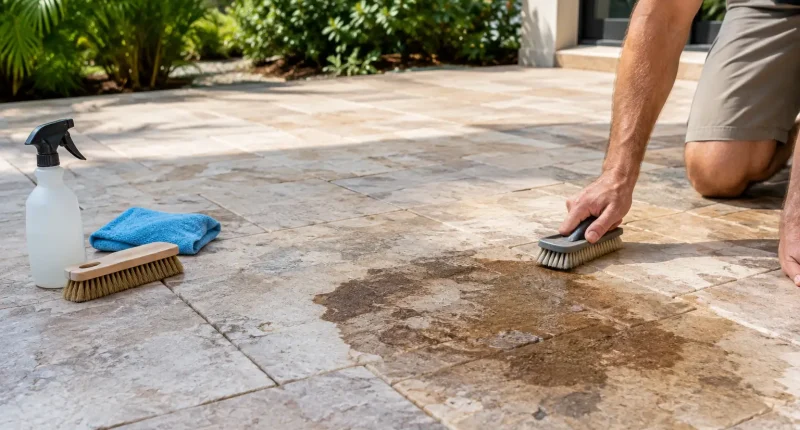
A small oil drip can become a much larger patio problem after a few hot, wet Tampa Bay weeks. Oil settles into the pores of pavers, concrete, and natural stone, where rain may spread it and sunlight can make the stain appear darker or more set in. The best way to remove patio oil stains depends on the surface, how long the spill has been there, and whether the patio has been sealed before.
A careful approach matters. Aggressive chemicals, harsh scrubbing, and high-pressure washing can leave behind discoloration, etching, damaged joint sand, or an uneven-looking surface. For a patio that is already weathered or has several stains, professional cleaning and restoration are often the safer path to a better overall result.
Why Patio Oil Stains Are Hard to Remove
Oil does not behave like ordinary dirt. Instead of sitting on top of the surface, it can soak into small openings in porous materials. Pavers, unsealed concrete, travertine, and grout lines are especially vulnerable because they have natural pores and textured areas that hold contaminants.
Fresh oil is usually easier to address than an older stain. Once foot traffic, rain, dust, and heat have worked the oil deeper into the surface, the visible mark may extend beyond the original spill area. The stain can also attract more dirt, creating a darker patch that stands out against a clean patio.
The patio material makes a real difference. Concrete may tolerate a different cleaning approach than clay or concrete pavers. Natural stone, including travertine, requires additional care because the wrong cleaner can alter the surface finish or cause permanent etching. If pavers have been sealed, the condition and type of existing sealer also affect how the stain should be treated.
Start by Identifying the Patio Surface
Before attempting to clean an oil spot, identify what you are working with. A paver patio has individual units separated by sand-filled joints. Concrete is commonly poured as one continuous slab. Natural stone may have uneven color variation, open pores, and a honed, tumbled, or textured finish.
This first step prevents a common mistake: treating every outdoor surface as though it were plain concrete. Methods that seem effective on a garage slab may not be appropriate for a sealed paver patio or a travertine pool deck.
It is also helpful to look at the stain itself. A recent cooking-oil spill near an outdoor kitchen calls for a different level of treatment than a large, dark automotive oil stain that has been present for months. If the affected area is close to a driveway, grill, outdoor furniture, or equipment, check for the source of the leak so the problem does not return after cleaning.
What to Do When the Spill Is Fresh
When oil is still fresh, the goal is to keep it from spreading and limit how much reaches the pores of the surface. Blot excess oil carefully with an absorbent material rather than wiping it across the patio. Wiping can spread the contamination into a larger area and push it farther into textured surfaces and joints.
Avoid reaching immediately for strong degreasers, acids, or household chemical mixtures. These products can react unpredictably with sealers, stone, nearby metals, landscaping, and colored pavers. They may lighten one section while leaving the oil beneath the surface, creating a new appearance problem without fully solving the original one.
Once excess oil has been contained, assess whether the spot remains visible after the area has dried. A faint shadow may need more than surface-level cleaning, particularly on older pavers or unsealed concrete.
Why Pressure Washing Alone Often Falls Short
Pressure washing can improve the general appearance of a patio, but water pressure alone does not always remove absorbed oil. In some cases, it can spread oily residue across surrounding pavers, drive contaminants into joints, or expose a contrast between the cleaned area and the rest of the patio.
The right pressure, water flow, cleaning solution, dwell time, and technique depend on the material and condition of the surface. That is why a professional surface-care evaluation looks beyond the stain itself. The goal is not simply to make one dark spot less visible. It is to clean the patio in a way that protects the pavers or stone and leaves the area looking consistent.
For paver patios, cleaning may also reveal weakened, missing, or contaminated joint sand. If the joints are not properly addressed afterward, the patio can lose the finished, stable appearance homeowners expect. In those situations, cleaning, joint sanding, and sealing can be considered as part of a complete restoration process.
When Professional Oil-Stain Removal Makes Sense
Professional service is especially worthwhile when an oil stain is old, widespread, or located on a high-visibility patio. It can also be the best choice for natural stone, colored pavers, previously sealed pavers, commercial walkways, restaurant patios, and pool-adjacent surfaces where appearance and appropriate surface care both matter.
A trained technician can evaluate the surface material, staining depth, existing sealer, drainage, and nearby areas that need protection during cleaning. This helps avoid a one-size-fits-all treatment that may create uneven color or surface damage.
Results depend on several conditions, including the age of the stain and the porosity of the patio. Deep oil stains can be stubborn, and no responsible professional should promise that every mark will disappear completely. Still, the right cleaning process can significantly improve the appearance of many affected surfaces while reducing the residue that continues attracting dirt.
For property managers and business owners, prompt professional attention can also help maintain a cleaner, more cared-for exterior. Oil-stained entry patios, common areas, and outdoor dining spaces can undermine the look of an otherwise well-maintained property.
Restoring Pavers After Oil Stain Treatment
An oil stain may be the issue that brings attention to broader patio wear. Over time, Tampa Bay rain, UV exposure, organic growth, foot traffic, and irrigation can leave pavers faded, dirty, or uneven in color. Cleaning only the stained spot can make the rest of the patio look dull by comparison.
A full paver restoration service addresses the surface more holistically. After appropriate cleaning, depleted or uneven joint sand can be replenished where needed. A professional paver sealer may then be applied to enhance the appearance of the pavers and help reduce absorption of certain contaminants.
Sealing is not a cure for every problem, and it does not make a patio maintenance-free. It can, however, make routine cleanup easier and reduce the opportunity for spills to penetrate as deeply as they would on an unprotected surface. The correct sealer and preparation are critical. Applying sealer over trapped stains, moisture, residue, or poorly cleaned pavers can lead to disappointing results.
Protecting Your Patio From Future Stains
Prevention starts with practical habits around the patio. Place grills and cooking equipment where small drips can be noticed quickly, and inspect outdoor equipment that may leak oil or lubricant. If vehicles or maintenance equipment are regularly brought near the patio, keep those activities away from decorative pavers and porous stone whenever possible.
Regular professional cleaning can help remove everyday buildup before it masks developing stains. For paver patios, periodic inspection of the joint sand and sealer condition can help identify when restoration work may be appropriate. A patio that is clean, properly maintained, and protected is easier to enjoy and presents better from the street, pool area, or outdoor living space.
HydroGlow Cleaning and Floor Care helps Tampa Bay property owners evaluate stained pavers, concrete, and natural stone with the care each surface requires. If oil stains are affecting your patio, driveway, walkway, or other outdoor surface, call HydroGlow at 813-586-0801 to request an evaluation or estimate.