
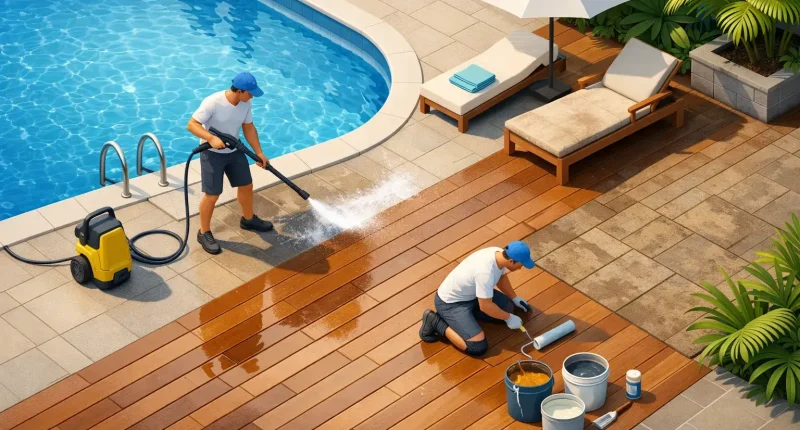
A pool deck can look tired long before the pool itself does. Dark organic growth, sunscreen residue, leaf stains, faded pavers, and a patchy old sealer can make an otherwise inviting outdoor space feel neglected. Professional pool deck cleaning and sealing addresses those visible problems as a complete process, restoring the surface first and then adding the protection it needs to hold up better through daily use.
For Tampa Bay homeowners, that distinction matters. Heat, humidity, frequent rain, pool water, landscaping debris, and year-round outdoor living all put pressure on pavers and concrete. A surface may be swept regularly and still develop embedded grime, slippery areas, uneven color, and stains that ordinary rinsing will not remove.
Why pool decks lose their clean appearance
Pool decks collect more than dirt. Bare feet track in fine sand and lawn soil. Splash-out leaves behind mineral residue. Sunscreen, body oils, food spills, and drink spills can cling to textured surfaces. In shaded or damp areas, algae and mildew may take hold, creating dark discoloration and reducing traction.
Pavers have joints that hold sand, debris, and weeds. Concrete can show discoloration in porous areas or around furniture and planters. Travertine and other natural stone need especially careful treatment because the wrong cleaner or pressure setting can affect the finish. The goal is not simply to make a deck look brighter for a day. It is to remove the buildup without damaging the material, then protect the newly cleaned surface from premature wear.
What professional pool deck cleaning and sealing includes
A quality service begins with evaluating the deck rather than applying the same process to every surface. Pavers, concrete, travertine, and other stone materials respond differently to cleaning solutions, pressure, and sealers. The condition of the existing coating also affects the work. A deck with a failing or blotchy previous sealer may need more preparation than one that has never been sealed.
The cleaning phase focuses on lifting organic growth, grime, stains, and residues from the surface and, where applicable, the paver joints. Technicians use material-appropriate methods to achieve a thorough clean while respecting the finish and condition of the deck. Detail work around edges, steps, drains, coping, and furniture areas is part of what separates a surface-care service from a quick rinse.
Once the deck is clean, it must dry properly before sealing. Skipping that waiting period can interfere with the finished appearance and performance of the sealer. After preparation, the right product is selected based on the deck material, its condition, the desired look, and how the space is used.
For paver decks, joint stabilization may also be part of the process when appropriate. Replenishing joint sand after cleaning helps support the pavers and improves the finished look. It is not a one-size-fits-all step, but it can be valuable for decks with depleted joints or visible movement.
The benefits go beyond a cleaner-looking deck
A professionally cleaned and sealed pool deck is easier to maintain because dirt and spills are less likely to settle into the pores as quickly. It can also help preserve color, reduce the weathered appearance caused by sun exposure, and make routine sweeping and rinsing more effective.
The visual difference is often immediate. Pavers can regain richer color and clearer definition between units. Concrete can look more even and refreshed. Natural stone can regain a cleaner, more cared-for appearance without being made to look artificial.
Protection also supports the long-term value of the surface. Replacing damaged pavers, correcting widespread staining, or addressing advanced deterioration is generally more disruptive than maintaining a deck before problems become severe. Sealing does not make a deck maintenance-free, and it cannot erase every existing flaw, but it gives a well-prepared surface a stronger defense against the messes and weather it faces.
Choosing the right finish for your deck
Not every homeowner wants the same result. Some prefer a natural, low-sheen finish that preserves the original character of pavers or stone. Others want a color-enhancing finish that brings out the depth and variation already present in the material. The best choice depends on the deck, not just a photo of a finished project.
A higher-gloss look can be appealing on certain surfaces, but it is not automatically the right option around a pool. The surface texture, drainage, sun exposure, foot traffic, and current condition all deserve consideration. A careful professional will discuss the look you want while prioritizing a finish that suits a wet, frequently used outdoor area.
It is also wise to be realistic about older surfaces. Sealing can improve uniformity and appearance, but it will not turn cracked, heavily eroded, or mismatched materials into brand-new ones. What it can do is make a sound deck look cleaner, richer, and more consistently maintained.
Signs your pool deck is ready for service
Homeowners often wait until the deck looks extremely dark or faded before scheduling service. Earlier care usually produces a more straightforward result. Consider a professional evaluation if you notice several of these conditions:
- Dark green, black, or gray growth in shaded or damp areas
- Pavers that look faded, dry, or uneven in color
- Persistent stains from leaves, furniture, pool activity, or landscaping
- Joint sand that appears low, washed out, or scattered across the deck
- A previous sealer that looks patchy, worn, peeling, or cloudy
The right timing depends on exposure and usage. A screened pool area may stay cleaner than an open deck under mature trees, while a heavily used entertainment area may need attention sooner than a lightly used patio. Rather than following a rigid calendar, watch the surface and respond before buildup becomes deeply established.
Why DIY results can be inconsistent
Rental equipment and store-bought products can help with light maintenance, but they carry risks when used without a clear understanding of the material. Excessive pressure can scar concrete, disturb paver joints, or create uneven cleaning patterns. Harsh chemicals can affect surrounding landscaping or leave unwanted changes in color and finish. Applying sealer over residue, moisture, or a failing prior coating can produce a disappointing result.
There is also the practical issue of coverage. A pool deck has edges, corners, coping, transitions, furniture areas, and narrow spaces that are easy to miss. Professional service is designed to handle the full surface, not just the open center where a machine can move easily.
HydroGlow Cleaning & Floor Care approaches pool decks with the same detail-focused care used across pavers, tile, grout, and natural stone. The process is tailored to the surface and its condition, with eco-conscious cleaning practices and a clear focus on results that look good and make ongoing upkeep easier.
Keeping a sealed deck looking its best
After service, simple habits can help extend the clean appearance. Sweep off leaves and mulch before they sit after rain. Rinse spills, poolside food residue, and concentrated dirt when you notice them. Use gentle cleaning methods for routine upkeep, and avoid treating one stained spot with an aggressive product that may leave a noticeably different patch behind.
Pay attention to areas under planters, lounge chairs, grills, and outdoor rugs. These spots can trap moisture and debris, which leads to uneven staining over time. Moving furniture occasionally and keeping drainage paths clear can make a visible difference.
A well-cared-for pool deck should support the way you use your home: easy weekends, relaxed gatherings, and a cleaner view every time you step outside. When your pavers, concrete, or stone begin to look worn, a professional assessment can provide a clear path back to a deck you are proud to enjoy.