
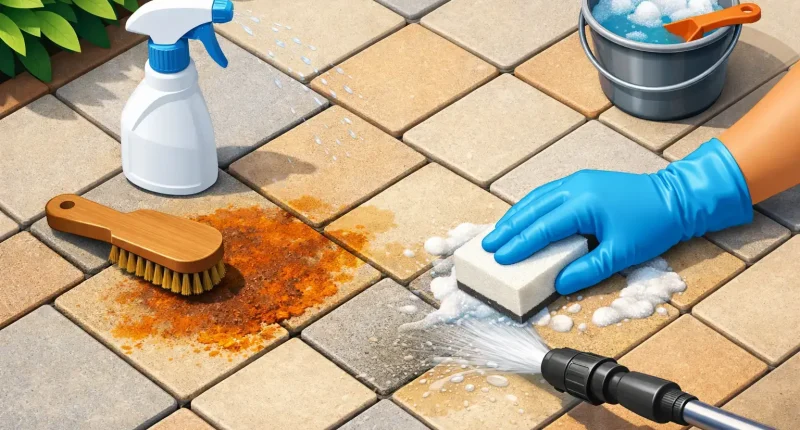
A rust stain can make an otherwise clean driveway, patio, or pool deck look neglected overnight. The good news is that you can often remove rust stains from pavers without replacing them, but the wrong cleaner can permanently lighten the surface, damage surrounding materials, or strip a protective sealer. The best approach depends on what caused the stain, the paver material, and how long the discoloration has been sitting.
Why Rust Stains Show Up on Pavers
Rust is usually caused by metal coming into repeated contact with moisture. Patio furniture legs, grill wheels, planter stands, tools, gates, and decorative metal items are common sources. In Florida, frequent rain, irrigation, and humid conditions give iron plenty of opportunity to oxidize and transfer onto porous pavers.
Fertilizer can also be the culprit. Some lawn and plant products contain iron, and a spill or overspray can leave orange-brown spotting that looks very much like rust. Irrigation water with high iron content may create stains along sprinkler lines, near downspouts, or at the edges of a driveway.
The stain is not always sitting on top of the paver. On unsealed or worn pavers, dissolved iron can move into the pores of the concrete or natural stone. That is why aggressive scrubbing alone rarely solves the problem and can leave a visibly rough or faded patch behind.
Identify the Paver Before Choosing a Cleaner
Not all pavers should be treated the same way. Concrete and brick pavers can often tolerate a purpose-made rust remover when used carefully. Natural stone requires more caution because certain stones can react badly with acidic products. Travertine, limestone, marble, and other calcium-based materials are especially vulnerable to etching, which can leave dull, pale areas that are harder to correct than the original rust stain.
Sealed pavers need a different level of care, too. A cleaner may remove the rust but leave a lighter spot in the sealer or weaken its protective finish. If your pavers have a glossy, enhanced, or recently sealed appearance, test first in an out-of-the-way location. When the surface is old, faded, or unevenly sealed, stain removal may be only one part of the work needed to restore a consistent appearance.
If you are unsure whether you have concrete pavers, brick, or natural stone, avoid experimenting with strong chemicals. A professional surface-care assessment can prevent a small stain from becoming a larger restoration project.
How to Remove Rust Stains From Pavers Step by Step
Start by moving the source of the rust away from the area. If a metal chair leg, planter, or grill wheel remains in place, the stain can return soon after cleaning. Brush away loose dirt, leaves, and debris so the rust treatment can reach the stained surface directly.
Next, rinse the pavers lightly with clean water. The goal is to dampen the area, not flood it. Standing water can dilute the cleaner too much and carry it into nearby grass, planting beds, or other sensitive surfaces.
Use a rust remover specifically labeled for the type of paver you have. Products designed for masonry or concrete generally use ingredients that dissolve iron deposits more effectively than household degreasers. Follow the product directions exactly, including dwell time. More product and more time do not necessarily mean better results.
Apply the cleaner only to the stained area using a small brush, applicator pad, or sprayer appropriate for the product. Let it work for the recommended period, then gently agitate with a soft nylon brush if needed. Do not use a wire brush. Metal bristles can scratch the surface and leave behind tiny particles that may create new rust spots.
Rinse thoroughly with clean water. Check the area once it is dry, because a damp paver can temporarily mask remaining discoloration. Deep stains may need a second controlled application. It is better to repeat a mild, targeted treatment than to use one harsh application that changes the paver color.
Always Test a Small Area First
A test spot is the simplest way to avoid an expensive surprise. Choose a hidden corner and apply the cleaner exactly as you plan to use it on the visible stain. Allow the area to dry completely before judging the result.
Look for changes in color, texture, sheen, and sealer appearance. If the test area becomes lighter, duller, or blotchy, stop before treating the larger stain. That reaction is a sign the product is not a good match for the surface or that a professional treatment is needed.
What Not to Use on Rust-Stained Pavers
Avoid muriatic acid and other harsh acid cleaners for routine rust removal. These products can react aggressively with concrete, mortar, and many natural stones. They may remove part of the stain while leaving etching, exposed aggregate, uneven color, or damage around the joints.
Bleach is not a rust remover. It can help with some organic discoloration, but it does not dissolve iron deposits effectively. On colored pavers or surrounding landscaping, it may create additional problems without addressing the source of the orange stain.
Pressure washing alone is also limited. Pressure can clean surface dirt, but it will not reliably lift rust that has absorbed into porous material. Excessive pressure can erode joint sand, scar the paver face, and leave a noticeably striped finish. A balanced process uses the right chemistry first, followed by controlled rinsing and cleaning.
Vinegar is often suggested as a household fix, but it is not a dependable choice for pavers. Its acidity can affect sensitive stone and may alter the appearance of concrete or sealed surfaces. A product selected for your specific material is the safer path.
When Rust Removal Needs Professional Help
Call for professional service when stains cover a large area, appear in multiple locations, or return after treatment. Widespread staining may point to irrigation water, fertilizer runoff, or a continuing metal source that should be corrected alongside the cleaning.
Professional help is also worthwhile when the pavers are sealed, heavily faded, expensive, or made from natural stone. Surface specialists can choose appropriate rust treatments, protect adjacent materials, clean the full area evenly, and evaluate whether resealing will help restore a more uniform finish.
For commercial entries, pool decks, high-traffic walkways, and large driveways, treating one rust spot in isolation can make the surrounding buildup more noticeable. A complete cleaning can create the consistent, cared-for appearance property owners and guests expect.
HydroGlow Cleaning & Floor Care approaches rust stains as part of the overall condition of the hardscape. That means looking beyond the orange mark to address embedded soil, tired sealers, uneven color, and the protection needed to keep the pavers easier to maintain afterward.
Prevent New Rust Stains From Forming
Once the pavers are clean, prevention is largely about eliminating metal-to-surface contact and reducing repeat exposure. Place protective non-metal feet beneath outdoor furniture and planters, especially on patios and pool decks that stay damp after rain. Check grills, gates, and decorative items for peeling paint or corroded hardware before they leave a stain.
Use care when applying lawn treatments near paved areas. Sweep up granules promptly, rinse accidental spills, and avoid overspray. If irrigation water is leaving recurring orange marks, have the water source and sprinkler pattern evaluated rather than repeatedly treating the pavers.
A properly maintained sealer can also make future staining easier to address by reducing how quickly contaminants absorb into the surface. Sealer is not a cure for an existing stain, and it should be applied only after the pavers are thoroughly cleaned, fully dry, and ready for protection.
A rust stain does not have to become a permanent distraction from your property’s curb appeal. Treat it patiently, use products suited to the material, and get a quote for professional help when the stain is deep, widespread, or affecting a valuable paved surface.