
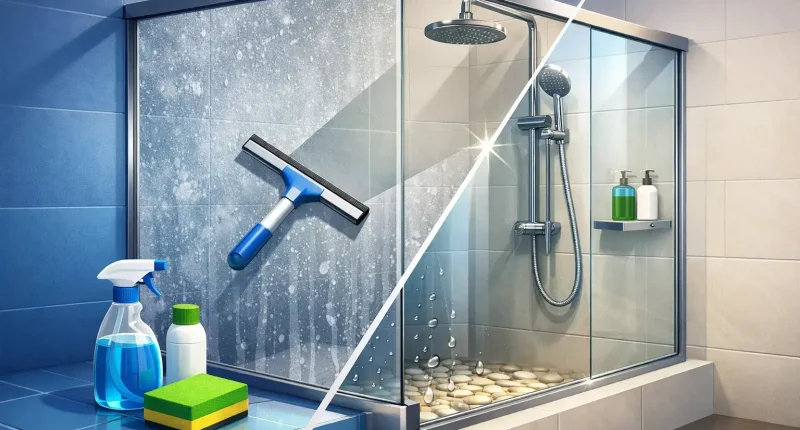
Cloudy shower doors can make an otherwise clean bathroom look neglected. The frustrating part is that ordinary bathroom spray often seems to work while the glass is wet, only for the white haze to return as it dries. Effective shower glass hard water removal means dealing with mineral deposits on the surface without creating scratches, dull spots, or further damage to the glass.
In Tampa Bay homes, frequent shower use and mineral-rich water can turn a light film into a stubborn, chalky buildup surprisingly quickly. The right approach depends on whether the glass is simply coated with minerals or has already developed permanent etching. Knowing the difference protects your shower enclosure and helps you choose a solution that actually lasts.
Why Hard Water Leaves Shower Glass Cloudy
Hard water contains dissolved minerals, most commonly calcium and magnesium. Every time water droplets dry on shower glass, a small amount of those minerals remains behind. Over weeks and months, those deposits stack up into the cloudy white film, spots, and streaks that are difficult to wipe away.
Soap, body oils, and shampoo residue make the problem worse. They create a sticky layer that holds minerals against the glass, especially along the bottom of doors, around handles, and near the edges of fixed panels. Humidity keeps the area damp, so the cycle continues even in bathrooms that are cleaned regularly.
At first, hard water staining may feel slightly rough to the touch. In more advanced cases, the glass can look hazy from every angle, even immediately after cleaning. That is usually the point when homeowners discover that stronger household products do not necessarily produce better results.
Shower Glass Hard Water Removal Starts With the Right Diagnosis
The most important question is whether you are looking at removable mineral buildup or etched glass. Mineral buildup sits on top of the surface. With the proper cleaning process, it can often be lifted away and the glass can regain its original clarity.
Etching is different. When minerals remain on glass for a long time, they can react with the surface and leave behind tiny areas of permanent dullness. The glass may still appear cloudy after deposits are removed because the surface itself has changed. A professional assessment can determine whether restoration can improve the appearance and how much improvement is realistic.
This distinction matters because aggressive scrubbing can make a disappointing situation worse. Scouring pads, razor blades used at the wrong angle, and harsh abrasive powders can leave fine scratches that catch light and make shower glass look permanently dull. A careful process should always begin with the least aggressive effective option.
What You Can Safely Do Between Professional Cleanings
Consistent light maintenance is the best defense against heavy mineral accumulation. After each shower, use a clean squeegee to pull water from the glass from top to bottom. It takes less than a minute and prevents most droplets from drying in place.
A soft microfiber cloth can handle the remaining moisture around hardware and lower corners. For light soap film, use a non-abrasive cleaner made for shower glass and follow its directions closely. Rinse thoroughly, because leftover cleaner can leave its own haze.
Avoid treating shower glass like a kitchen pan or a heavily soiled tile floor. Steel wool, gritty powders, rough sponges, and improvised scraping tools are not a good match for clear glass. Even if they remove a spot quickly, they can trade a temporary mineral stain for visible surface damage.
Ventilation also helps. Running the bathroom exhaust fan during and after a shower reduces lingering moisture, which can slow down soap film and mineral spotting. This will not eliminate hard water, but it makes your regular maintenance more effective.
Why DIY Remedies Often Fall Short
Mild acidic cleaners can loosen fresh mineral deposits, so they may help with early spotting. But they have limits. Heavy buildup is often layered with soap residue, and one product may not be able to break through both problems evenly. Repeated applications can also leave homeowners spending hours on a door that still looks cloudy at the edges.
The greater concern is using a strong product without knowing how it will affect nearby materials. Shower enclosures include metal tracks, handles, tile, grout, stone thresholds, and finished surfaces that may react differently than glass. A cleaner that seems harmless on one surface can discolor or dull another if it is allowed to sit too long.
DIY cleaning is most useful when the glass is maintained regularly and the deposits are still light. It becomes less practical when the door has a thick white crust, persistent haze, rough texture, or stains that have been present for years. That is where professional restoration can save time and reduce the risk of costly replacement.
What Professional Shower Glass Restoration Involves
Professional shower-glass treatment is not just a stronger bottle of cleaner. A surface-care specialist evaluates the type and severity of the staining, the condition of the glass, and the materials around it before choosing a cleaning and restoration method.
The process typically starts by removing soap film and surface contamination so the mineral deposits can be addressed directly. Technicians then use specialized products and controlled techniques designed to break down buildup while protecting the glass and adjacent finishes. Stubborn areas may require careful, progressive treatment rather than one aggressive pass.
Once the buildup has been removed as fully as the glass condition allows, the enclosure is rinsed and detailed to restore a clean, even appearance. When appropriate, a protective treatment may be applied to make future water spotting easier to manage. This does not mean the glass will never need cleaning again. It means water and residue are less likely to cling as quickly, making routine care easier.
HydroGlow Cleaning & Floor Care approaches shower glass as part of the complete bathroom surface system. That matters when glass staining appears alongside dull tile, stained grout, or worn natural stone. Coordinating care across those surfaces helps the room look consistently refreshed instead of leaving one restored feature next to another that still looks tired.
When Restoration Is Better Than Replacement
Replacement is sometimes necessary when glass is cracked, deeply damaged, or severely etched beyond meaningful improvement. But many homeowners consider replacement before exploring restoration, simply because they have not seen what a proper mineral-removal process can accomplish.
Restoration can be a sensible first step when the glass is structurally sound but obscured by deposits and haze. It often costs less than replacing an entire enclosure, avoids disruption to the bathroom, and preserves hardware and framing that are still in good condition. The trade-off is that severely etched glass may improve substantially without returning to factory-new clarity. A trustworthy provider should be direct about that before work begins.
For rental properties, hotels, offices, and other commercial spaces, restoration can also support a more polished guest or customer experience without unnecessary downtime. Clear shower glass signals that a property is cared for in the details, not just on the most visible surfaces.
Keep the Glass Clear After Treatment
After shower glass hard water removal, the maintenance plan should be simple enough to follow. Squeegee after use, wipe the lower edges and hardware, and address fresh spotting before it becomes a hard crust. A weekly non-abrasive cleaning is usually far easier than a major cleaning project every few months.
If your household has especially hard water, frequent shower use, or glass that stays damp for long periods, schedule periodic professional service before the deposits become severe again. The ideal timing depends on how fast buildup returns and how much daily maintenance the household can realistically keep up with.
Cloudy shower glass does not have to be something you learn to ignore. A careful evaluation can tell you whether your enclosure needs routine cleaning, specialized hard water removal, restoration, or a maintenance plan that keeps the results looking their best. Get a quote from a local surface-care specialist before assuming replacement is the only answer.