
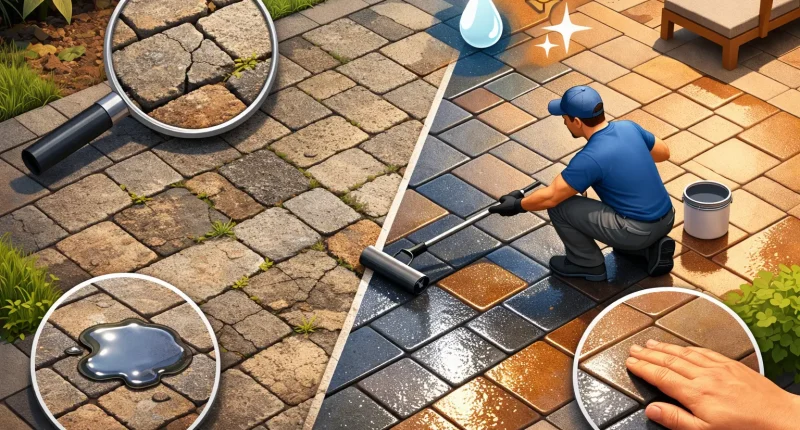
A paver patio, driveway, walkway, or pool deck can look great for years, then gradually begin to lose the color, consistency, or finish it once had.
If you are asking when pavers should be resealed, the best answer is not simply “every few years.”
The right timing depends on the paver type, previous sealer, sun exposure, traffic, drainage, maintenance, and how the surface is actually wearing.
For Tampa Bay properties, strong sun, heavy rain, humidity, irrigation, pool use, landscaping debris, and vehicle traffic can all affect how quickly a sealed paver surface changes.
At HydroGlow Cleaning and Floor Care, resealing decisions should be based on the condition of the surface rather than an automatic calendar schedule.
There Is No Single Resealing Schedule for Every Paver Surface
Some sealed paver surfaces may need professional attention sooner than others.
A driveway exposed to full sun and daily vehicle traffic can wear differently from:
- A covered patio
- A lightly used walkway
- A shaded pool deck
- A commercial entrance
- A courtyard
- An HOA common area
The type of sealer, quality of the previous application, paver material, drainage, and maintenance habits also affect how long the finish remains serviceable.
Rather than resealing automatically after a fixed number of years, it is usually better to evaluate how the surface looks and performs.
Signs Your Pavers May Be Ready for Professional Evaluation
A professional evaluation may be worthwhile when you begin noticing changes such as:
- Faded or dull appearance
- Uneven color
- Areas that no longer match the rest of the surface
- Increased staining
- Low or missing joint sand
- Worn traffic paths
- Cloudy or hazy sealer
- Peeling or flaking
- Dark or blotchy areas
- Pavers becoming harder to keep clean
These signs do not automatically mean the surface should be resealed immediately.
They indicate that the condition of the existing sealer and the pavers should be evaluated before another coating is applied.
Faded Color Does Not Always Mean the Pavers Need New Sealer
A faded-looking surface may be caused by more than sealer wear.
Possible causes include:
- Embedded dirt
- Organic buildup
- Mineral residue
- Irrigation staining
- Worn previous sealer
- Uneven weathering
- Sun exposure
- Surface wear
Professional cleaning may reveal more of the original paver color before a resealing decision is made.
This is one reason proper cleaning and preparation should come before applying additional sealer.
Water Absorption Can Be a Clue, But It Is Not a Perfect Test
Property owners sometimes watch how water behaves on the pavers to judge whether the sealer is still performing.
In some cases, water may absorb more quickly into areas where the protective finish has worn.
However, this is not a reliable stand-alone test because water behavior can vary based on:
- Paver type
- Porosity
- Sealer type
- Surface texture
- Weather conditions
- Previous treatments
Water absorption can be one clue, but the overall surface condition is more important.
Staining May Become More Noticeable as Protection Wears
As a sealed surface ages, some pavers may become more susceptible to visible staining.
Common examples include:
- Oil
- Automotive residue
- Food and drink spills
- Rust
- Irrigation stains
- Leaf tannins
- Poolside residue
- Organic debris
Resealing does not remove existing stains.
The surface should first be properly cleaned and any stains treated as appropriate before a new sealer is considered.
Joint Sand Should Be Evaluated Before Resealing
Joint condition is an important part of paver maintenance.
Over time, joint sand can be lost because of:
- Rain
- Drainage
- Traffic
- Previous pressure washing
- Ant activity
- General weather exposure
When joint sand is low or uneven, professional paver cleaning, joint sanding, and sealing may be more appropriate than simply applying another coat of sealer.
Joint sanding does not permanently prevent weeds or eliminate every type of paver movement.
Its role is to restore the joints as part of the overall paver system.
Peeling, Whitening, or Cloudy Sealer Needs a Different Approach
Not every aging paver surface is ready for routine resealing.
Warning signs such as:
- Peeling
- Whitening
- Haze
- Cloudiness
- Excessive gloss
- Sticky areas
- Dark patches
- Uneven finish
may indicate a problem with the previous sealer or surface preparation.
Possible causes can include:
- Moisture
- Product incompatibility
- Improper application
- Excess product
- Trapped residue
- Previous coating failure
In these cases, applying more sealer over the existing finish may make the problem worse.
Professional evaluation should come first.
Tampa Bay Conditions Can Affect Sealer Wear
Pavers in Tampa Bay are exposed to demanding outdoor conditions throughout the year.
Common factors include:
- Strong sun
- Heavy seasonal rain
- High humidity
- Irrigation
- Landscaping debris
- Organic growth
- Vehicle traffic
- Poolside activity
- Frequent outdoor use
Different areas on the same property may age at different rates.
For example, a driveway may show wear sooner than a covered patio.
A shaded walkway may develop organic buildup while a fully exposed area shows more sun-related fading.
Each surface should be evaluated based on its actual condition.
Pool Deck Pavers May Wear Differently
Pool decks are exposed to a combination of:
- Frequent moisture
- Bare-foot traffic
- Sunscreen
- Poolside residue
- Outdoor furniture
- Landscaping debris
- Cleaning products
- Sun and shade
These conditions can affect appearance and maintenance differently from a driveway or covered patio.
When resealing a pool deck, the intended use of the surface should also be considered when selecting an appropriate product and finish.
Preparation Matters More Than Simply Adding Another Coat
A fresh sealer should not be applied over an improperly prepared surface.
Potential problems include sealing over:
- Dirt
- Organic buildup
- Stains
- Trapped moisture
- Failing previous coatings
- Improperly prepared joints
Professional paver care begins with evaluating and preparing the surface before deciding whether resealing is appropriate.
Depending on the condition of the pavers, the process may include:
- Professional cleaning
- Targeted stain treatment
- Joint sanding
- Failed-sealer correction
- Drying and preparation
- Application of an appropriate sealer
Choosing the Right Finish
Resealing is also an opportunity to consider the appearance you want to maintain.
Depending on the paver type, condition, and product selected, options may include:
- A more natural appearance
- A lower-sheen finish
- A richer color-enhanced appearance
The best option is not automatically the glossiest one.
The appropriate finish should match:
- The paver material
- Existing surface condition
- Previous treatments
- Sun exposure
- Traffic
- Poolside use
- Desired appearance
Avoid Resealing Over Existing Problems
Do-it-yourself resealing can create problems when the surface already has:
- Uneven old sealer
- Haze
- Staining
- Low joint sand
- Moisture concerns
- Peeling
- Multiple previous coatings
Applying another product over an unsuitable surface can lead to:
- Blotchy appearance
- Uneven sheen
- Haze
- Sticky areas
- Poor bonding
- More difficult restoration later
Large areas, failed-sealer conditions, and heavily weathered pavers are usually better evaluated before additional product is applied.
Maintaining Pavers Between Resealing Services
Regular maintenance can help preserve the appearance of sealed pavers.
Helpful practices include:
- Sweep leaves and debris regularly
- Address spills promptly
- Avoid harsh chemicals
- Keep irrigation from repeatedly spraying the hardscape when possible
- Monitor joint sand
- Watch for developing stains
- Avoid overly aggressive pressure washing
- Pay attention to changes in sealer appearance
Improper pressure washing can remove joint sand and affect the surface or existing finish.
Professional pressure washing and exterior surface cleaning should be matched to the material and condition of the pavers.
When Should You Have Your Pavers Evaluated?
Professional evaluation may make sense when:
- The finish looks noticeably worn
- Color enhancement has faded
- The surface stains more easily
- Joint sand is low
- Previous sealer looks cloudy or uneven
- Peeling or flaking is present
- The pavers are increasingly difficult to maintain
- You are unsure whether the surface needs cleaning, resealing, or restoration
The goal is to choose the correct process based on the condition of the pavers rather than automatically applying another coat.
Professional Paver Resealing in Tampa Bay
There is no single resealing schedule that works for every property.
The best timing depends on how the pavers are wearing, how the existing sealer is performing, and whether the surface needs cleaning, joint sanding, sealer correction, or additional restoration first.
HydroGlow Cleaning and Floor Care provides professional paver cleaning, restoration, joint sanding, and sealing throughout Tampa Bay and surrounding service areas.
If your driveway, patio, walkway, or pool deck is looking faded, uneven, stained, or overdue for professional care, call HydroGlow Cleaning and Floor Care at 813-586-0801 to request an evaluation or estimate.